
The TALQ Consortium organised the first plug fest to verify interoperability of multiple smart city sensors and controllers with Central Management Software (CMS) from various vendors. Thirteen TALQ member companies attended a developers’ workshop and plug fest event to test implementations of TALQ version 2.0 against each other. Each of the tested CMS could successfully control each Smart City Network and Gateway, demonstrating that interoperability looks set to become the standard in Smart City projects. The official TALQ version 2.0 certification programme is expected to be ready by March 2019 to allow cities to include TALQ certification as a requirement in their tenders.
Cities require interoperability between smart city products from various vendors to avoid being locked in by proprietary systems. They may also need several smart city vertical apps to be controlled within a single central management software. That’s why the TALQ Consortium developed the Smart City Protocol to unify systems from multiple suppliers addressing a range of smart city use cases. Thanks to the TALQ Version 2.0 smart city protocol, cities are now able to select devices and networks from multiple vendors and control them through a single Central Management Software. TALQ has also developed a certification programme to guarantee interoperability for cities.
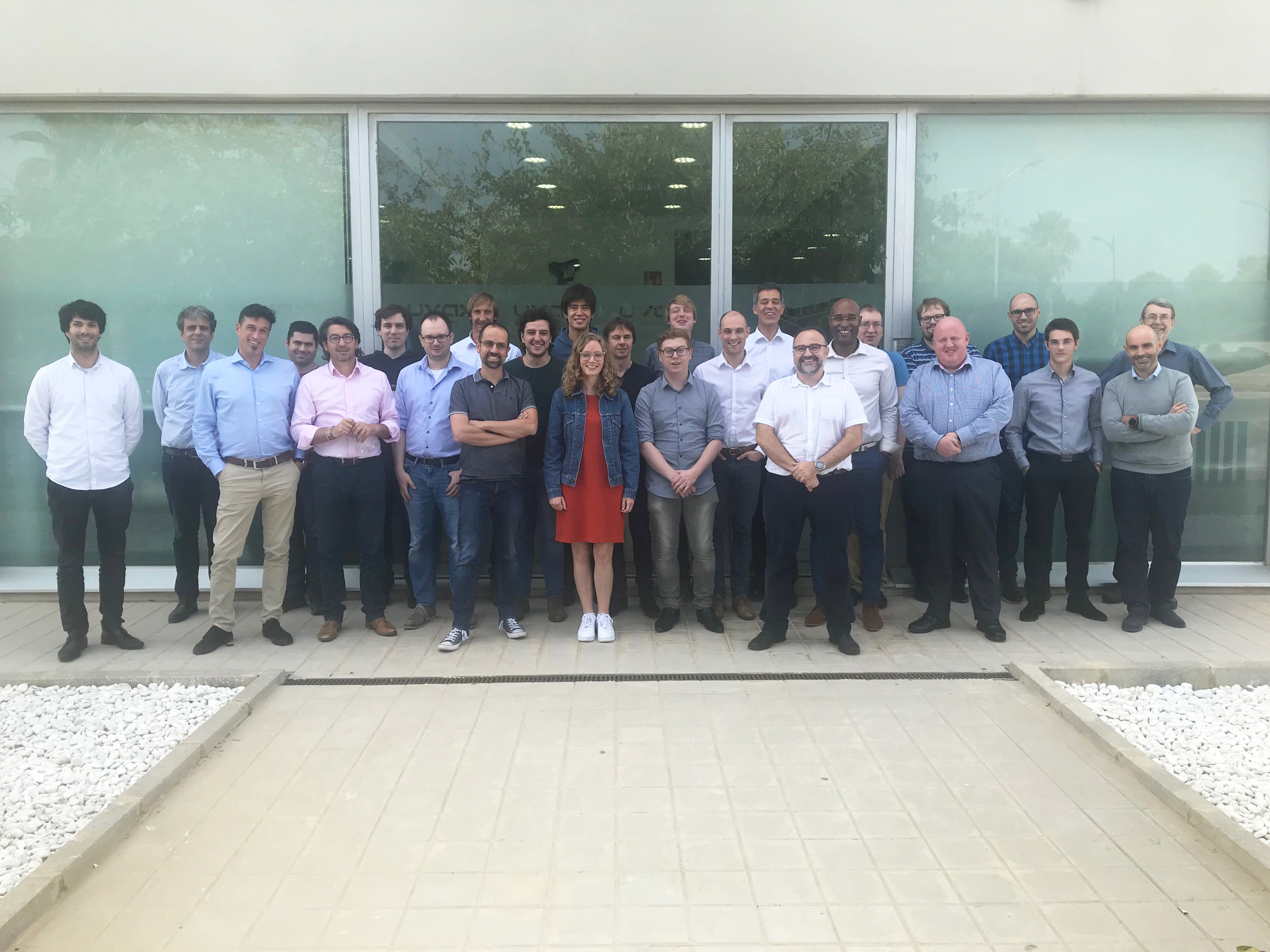
Attendees of TALQ plug fest and Developers’ Workshop in Valencia, Spain, in October 2018. © TALQ Consortium
TALQ Version 2.o is based on globally accepted principles: a RESTful approach and associated JSON device and resource data models. This makes it easy to integrate into both Central Management Software and Outdoor Device Networks. Over the past few months, many member companies of the TALQ Consortium have started to support the TALQ Smart City protocol in their systems. Together with other companies who are planning to start the implementation shortly, they came to Valencia for two days of a TALQ developer’s workshop and plug fest.
During the plug fest session, seven TALQ implementations were tested and all Central Management Software could control, command and monitor all smart city networks and gateways. Even though several new features were added compared to TALQ version 1 – including device commissioning, multiple CMS and other smart city vertical applications – attendees stated that TALQ Version 2.0 is much simpler to integrate than version 1. Furthermore, the session was a new opportunity for the TALQ members to test the TALQ test tool, clarify some complex use cases and fix minor issues. With thirteen companies from six countries, this TALQ developer’s workshop demonstrated the fast-growing awareness and interest from the smart city industry in providing interoperability to cities.
The TALQ team is now preparing the formal certification programme expected to be ready in Spring of 2019.
