
 Introduction
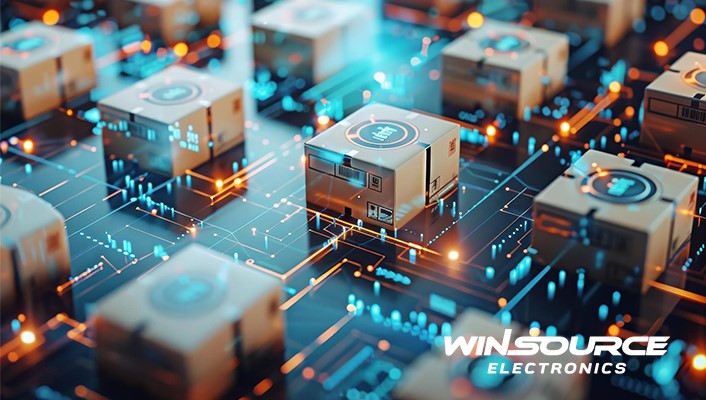
As globalization and technology rapidly advance, supply chain management in the electronics industry faces significant challenges and opportunities. The widespread adoption of Artificial Intelligence (AI) and the Internet of Things (IoT) is gradually transforming how supply chains operate, enhancing efficiency, transparency, and responsiveness. This article explores how these technologies propel supply chain management towards automation and intelligence and the long-term impact this transformation may have on the electronics industry.
Applications in Supply Chain Management
1.Artificial Intelligence (AI): From Prediction to Optimization
The core advantage of AI lies in its ability to process and analyse large data sets, extracting valuable information and patterns. In supply chain management, AI enhances forecasting by helping businesses predict market demand fluctuations, optimize inventory levels, and adjust production plans in real-time. For instance, WIN SOURCE, a global distributor of electronic components, has implemented AI-based demand forecasting and inventory management systems. These systems have significantly improved the efficiency and accuracy of inventory management, enabling the company to predict and adjust stock requirements more effectively. According to the company’s reports, these achievements have reduced inventory costs by approximately 20% and significantly enhanced customer satisfaction.
2.Internet of Things (IoT): A Revolution in Connectivity and Monitoring
IoT technology enhances operational transparency by deploying intelligent sensors and devices throughout the supply chain. These devices monitor the movement and condition of products in real time, ensuring every step from raw material acquisition to final product delivery is under surveillance. With the proliferation of 5G technology, IoT device performance is expected to improve dramatically, making data transmission faster and more stable, further enhancing the efficiency and reliability of supply chains.
Future Developments: Towards a Fully Intelligent Supply Chain
The supply chain management of the future is expected to become a highly integrated and automated system that not only covers internal operations but also extends to direct interactions with suppliers and customers. Key trends include:
1.Deeper Integration of AI and IoT: In the future, AI will integrate more deeply with IoT devices to enable more intelligent data analysis and decision support, such as continuously optimizing logistics routes and inventory management through machine learning.
2.Blockchain Implementation: Applying blockchain technology in supply chains can increase transaction transparency and security, providing a shared, tamper-proof record platform for all participants.
3.Digital Twin Technology: By creating a virtual replica of the supply chain, businesses can test and optimize supply chain strategies in a risk-free environment, responding to market changes in real time.
Conclusion
By integrating advanced AI and IoT technologies, supply chain management in the electronics industry is moving towards comprehensive automation and intelligence. This transformation not only increases efficiency and reduces costs but also allows businesses to respond more flexibly to rapid market changes, enhancing their competitiveness. As technology continues to advance, future supply chains will become more intelligent, driving sustainable development and innovation in the electronics industry.
