
By Mark Patrick, Mouser Electronics
Electric motor-driven systems have had a major impact on the planet…and it hasn’t all been positive. However, with a little lateral thinking to improve their energy efficiency, total global electricity demand could be cut by about 10 per cent. In sustainability terms, that’s a goal worth pursuing.
Of course, much has already been done to counter the effects of industrial pollution, and many more changes are undoubtedly around the corner. The electronics industry has a direct role to play in developing innovations that will encourage green energy production, reduce energy consumption, minimise maintenance, and prevent unnecessary waste. At the heart of this is the electric motor-driven system (EMDS).
Global Electricity Consumption
A statistic in a 2011 report from the International Energy Agency (IEA) revealed that electric motor-driven systems are the largest single-energy end users and account for more than 40 per cent of global electricity consumption.[1] Motor-driven systems consume over twice as much energy as lighting. A report by the US Department of Energy went further, claiming that EMDSs at the time consumed “over half of all electricity in the United States and over 70% of all electricity in many industrial plants.”[2]
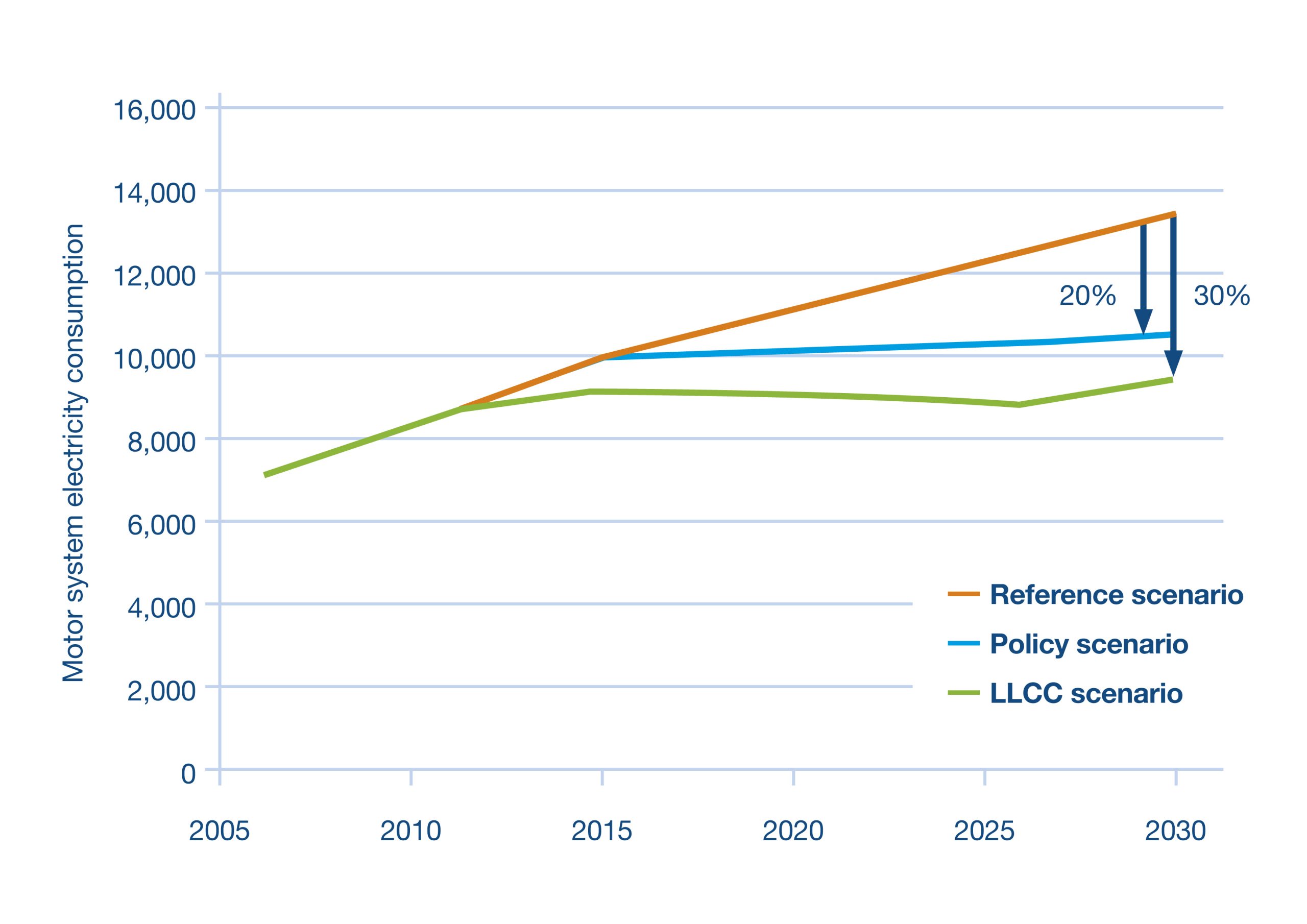
The IEA report states that if no remedial action was taken, by 2030, energy consumption from electric motors could rise to 13,360TWh a year and annual CO2 emissions to 8,570 million tonnes (Mt). End‐users would spend almost $900 billion per annum on electricity used in EDMSs. The body also reported that the industrial sector was by far the greatest consumer of EMDS electricity (64 per cent), compared to 13 per cent in the residential sector. Drilling deeper into the figures, the IEA estimated that while large electric motors with more than 375kW output power made up just 0.03 per cent of the electric motor stock, they were responsible for around 23 per cent of all motor power consumption and over 10 per cent of total global energy consumption (Figure 1).

Figure 1: Projected global electric motor‐system electricity consumption. (Source: International Energy Agency; redrawn by Mouser Electronics)
Optimising EMDSs
On a positive note, the IEA’s report highlighted a significant level of untapped potential for energy efficiency in EMDSs. The report stressed the need to scale up operations to realise the vast savings potential of optimised systems. It calculated that the most efficient motors could typically save 4 per cent to 5 per cent of all electric motor energy consumption. Also, if the energy efficiency of motor systems improved by between 20 per cent and 30 per cent, this could bring total global electricity demand down by around 10 per cent.
The report went further, adding that even larger savings could be achieved if all EMDSs were fully optimised. It estimated that improving EMDS efficiency could save 42,000TWh of electricity demand, 29Gt of CO2 emissions, and $2.8 trillion in electricity costs by 2030.
It’s clear from this insight that electric motor design and maintenance must play a central role in the sustainability efforts of countries across the globe by helping to optimise the efficiency of motor-driven systems. Productivity would improve, and significant amounts of energy (and money) would be saved. Because the vast majority of electricity consumed by an EMDS is used by the electric motor itself, engineering and maintenance teams need to focus their efforts on how to optimise motor control and operation. This will have a major and direct impact on energy consumption.
Applying Edge AI to MEMS
One of the most effective approaches engineering teams can take to improving the efficiency of EMDSs is to apply edge AI to a preventive maintenance strategy. Using the power of edge AI with microelectromechanical system (MEMS) sensing devices can enable a device’s running condition to be monitored more accurately, reducing electric motor consumption. Real-time sensor data that was previously unavailable can be used to identify anomalies early and predict when a machine is likely to fail. By allowing problems to be dealt with much earlier than before, edge AI MEMS sensors would not only avoid costly downtime but, more importantly, boost the efficiency of an EMDS so that it consumes less energy.
One tool for maintenance/condition-based monitoring is the CN0549 Condition Based Monitoring (CbM) Development Platform (Figure 2) from Analog Devices Inc. This device uses vibration sensing to provide an accurate representation of the status of the monitored equipment.
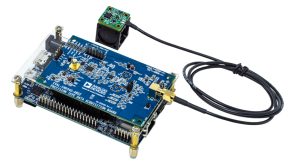
Figure 2: Analog Devices CN0549 CbM Development Platform (Source: Mouser Electronics)
At the same time, the number of Internet of Things (IoT) devices and installations around the world is now in the millions, while neural networks are more commercially advanced, parallel computation is no longer in its infancy, and 5G/6G technology is coming of age. This means that the industrial sector is better placed than ever to take advantage of the improved insights that edge AI can deliver while also cutting operational costs.
Motor Control Efficiency
As the condition and reliability of a motor have a direct impact on productivity and uptime, efficient motor control is essential. The report from the US Department of Energy states that there are three key factors associated with drive system efficiency: power quality, motor and transmission efficiency, and monitoring and maintenance. “Health monitoring”, it said, was essential.
The IEA report also identified three key ways to make significant savings in this area:
- use properly sized and energy‐efficient motors,
- use adjustable‐speed drives (ASDs) wherever possible to match the motor speed and torque to the system’s mechanical load requirements, and
- optimise the entire system.
This last recommendation included having a correctly sized motor, efficient gears and transmissions, and efficient end‐use equipment to achieve minimal energy losses.
AMT49406 code-free field-of-control (FOC) motor controller ICs (Figure 3) from Allegro MicroSystems are three-phase, sensorless, brushless DC (BLDC) motor drivers (gate drivers) that operate from 5.5V to 50V. The devices optimise motor startup performance, with analogue, pulse-width modulation (PWM), or clock inputs controlling the motor speed. Closed-loop speed control is optional, and the RPM-to-clock frequency ratio is programmable.
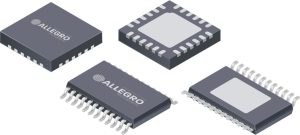
Figure 3: Allegro MicroSystems AMT49406 FOC BLDC motor controller ICs. (Source: Mouser Electronics)
Minimum Energy Performance Standards
One way of keeping consumption down and efficiency up in motor-driven systems is to set minimum energy performance standards (MEPSs) which designers must adhere to. According to the IEA, in the European Union in 2010, industrial and residential systems governed by MEPSs were responsible for just 38 per cent of all motor electricity consumption.
Another way to boost efficiency in motors is to take advantage of wide bandgap semiconductor technology, such as silicon carbide (SiC) and gallium nitride (GaN). Offering a larger bandgap than conventional semiconductors, wide bandgap semiconductors allow higher voltages to be used. They also speed up switching which reduces thermal losses in motors and increases their efficiency.
GaN in particular has become the designer’s choice because it has a 3.4eV bandgap compared to SiC’s 1.12eV. This wider bandgap enables the semiconductor to sustain even higher voltages and temperatures than silicon MOSFETs. Cost savings are achieved by using smaller and lighter magnetics and reducing the system’s cooling requirements. Also, likely to offer the lowest device cost, GaN semiconductors produce fewer losses than SiCs and generate less volume because they use smaller passive components. The overall effect is reduced system costs.
One example is the LMG3410R070 GaN Power Stage from Texas Instruments, which incorporates characteristics that simplify design, maximise reliability and optimise the performance of any power supply. Features include a gate drive that enables 100V/ns switching with near-zero Vds ringing and a 100ns current limiting that self-protects against unintended shoot-through events. These features also include a system interface signal which makes self-monitoring possible.
Green Energy Solution
Advances in preventive maintenance for electric motor driven systems have the potential to cut energy usage and demand considerably. The IEA report states that boosting the energy efficiency of electric motor-driven systems by 20 per cent to 30 per cent would lower global electricity demand by roughly 10 per cent.
This is the challenge facing the electronics industry, which has a key role to play in reducing energy consumption, minimising waste, and leading the way in green energy production. In particular, designers of EMDSs need to use all the tools at their disposal to boost efficiency and cut energy usage.
[1] “Energy Efficiency Policy Opportunities for Electric Motor-Driven Systems,” IEA, accessed November 10, 2023, https://www.iea.org/reports/energy-efficiency-policy-opportunities-for-electric-motor-driven-systems
[2] Motor Challenge, U.S. Department of Energy. “Optimizing Your Motor-Driven System,” Fact sheet. Accessed November 10, 2023, https://www.energy.gov/sites/prod/files/2014/04/f15/mc-0381.pdf.
