
 When designing the electronics for video equipment in today’s global and highly competitive markets, be it a projector, codec unit or any other video capture, processing or display item, the bill of materials cost is critical to your ability to realise profitable revenues. However, differentiating on cost alone is only a good strategy if your whole company and supply chain is structured to compete on those terms. Differentiating your product to suit your target market is therefore also critical for the vast majority of equipment suppliers.
To some extent, differentiating the functionality you offer your customers may be possible in software but more typically the differentiation will need to be done in the electronic hardware design. Traditional thinking directs us to start with the available off-the-shelf silicon chips that cover the majority of the required functionality. These are purpose-designed and therefore competitively priced but will typically contain some features you don’t want and omit some features you do want. There’s a good chance you’ll then want to add those extra features in an FPGA sitting beside those purpose-designed chips. This is where you can differentiate your product from those of your competitors,  with additional inputs, outputs, functions or control features for example. This traditional design approach is based on the assumption that purpose-designed chips are less expensive than FPGAs. Increasingly however, this is not necessarily the case.
FPGAs started life as a simple array of logic functions and flip-flops that could be interconnected to build any function. These were very flexible but did not make the most efficient use of the silicon. Nowadays, as much as half of the FPGA may comprise purpose-built functions that are common to a particular class of application. The FPGA is likely to have been fabricated in a leading-edge process technology and purchased in volumes that command aggressive pricing. All these factors result in an FPGA which has the potential to be even less expensive than purpose-designed chips, if the design can be implemented efficiently on it. This is where expertise in optimising a design for the target platform can make the difference.
One example of this is chips for transmitting video over IP, a common requirement for multiple applications including UHD KVMs, extenders and distributors. Various purpose-designed chips are available for this and there is also an FPGA-based chip available from Omnitek, called Javelin, which makes extremely efficient use of the FPGA’s resources and costs the same or less. The Javelin chip can act as the server or the client, converting HDMI 2.0 or 12G-SDI video into TCP/IP protocol or vice-versa.
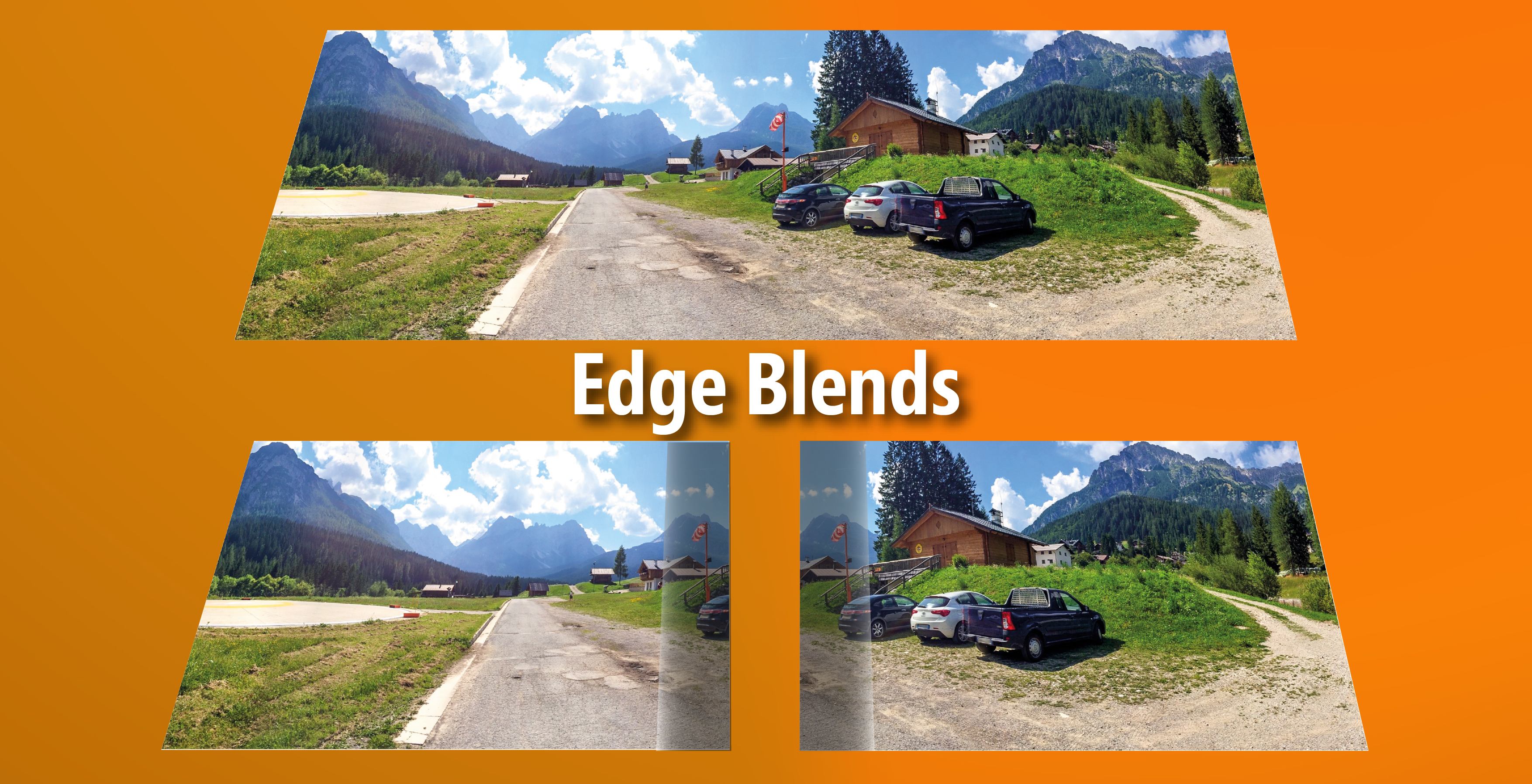 Another example is chips for warping and edge blending projected video streams. The Omnitek Flex 2K and Flex 4K chips enable rectilinear or arbitrary warping for projecting up to 4K (4096 x 2400) images at 60 frames per second onto not-flat surfaces and can also perform camera lens correction. The edge blend feature enables multi-projector installations including video walls as well as virtual reality headsets.
If hardware differentiation is required, it is relatively easy to add features such as additional functions, inputs or outputs to the Javelin or Flex chips and fit the new design into the next largest FPGA, resulting in a single-chip differentiated solution at a very competitive price.
FPGAs also offer other benefits over purposed-designed chips. Firstly, FPGA designs enable early access to new markets for which purpose-designed chips are not yet available. Secondly, it is easy to offer variants of a product (for example with different feature sets or supporting different standards) using the same PCB by simply programming the FPGA with a different code or bitstream, thus reducing manufacturing costs, stock and inventory while remaining flexible to market demands.
Visit Omnitek’s web site at www.omnitek.tv/devices for more information or email consultancy@omnitek.tv.
