
ProxFusion multi-mode sensing solves reliability challenges in modern touch interfaces
Hidden interfaces and low-power designs drive demand for multi-sensor architectures
Modern product designs increasingly rely on sealed surfaces, hidden controls and premium materials, yet traditional capacitive interfaces continue to face reliability limitations in wet conditions, through thick gloves and behind challenging overlays.
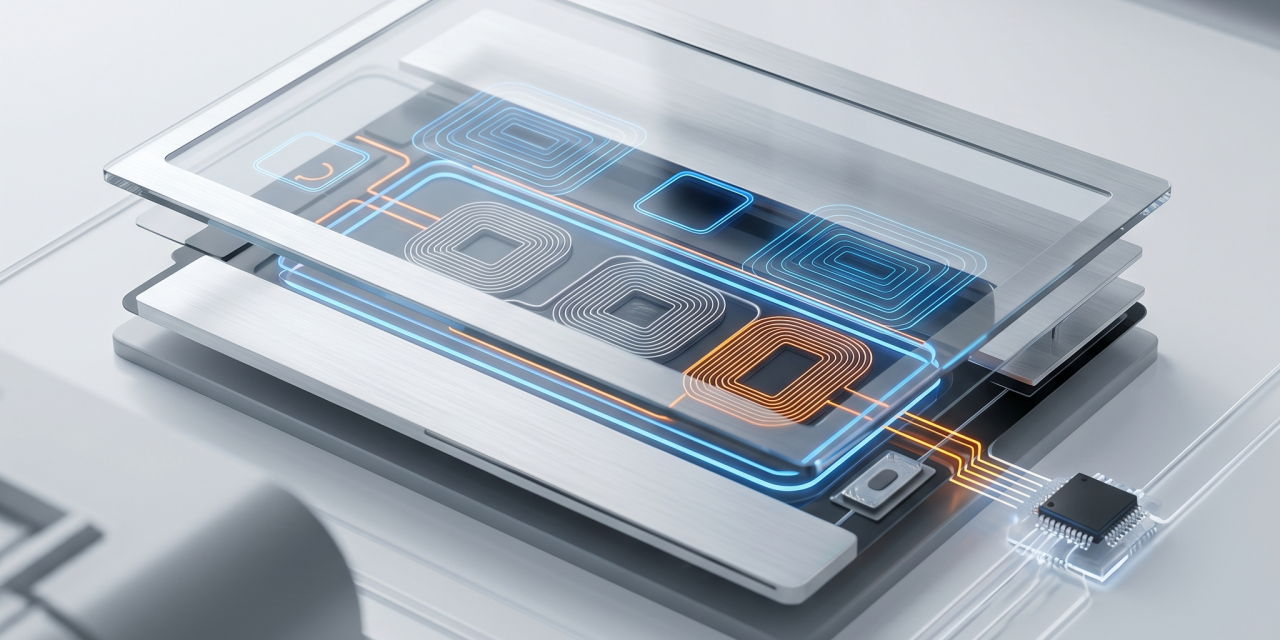
Azoteq’s ProxFusion architecture addresses these constraints by combining multiple sensing technologies within a single IC, allowing capacitive and inductive sensing to operate simultaneously or interchangeably while maintaining ultra-low power consumption. The result is a reduction in component count, PCB complexity and power requirements, while improving interface reliability across industrial, medical, consumer and automotive applications. Azoteq ProxFusion family‘s integrates capacitive, inductive and, in some devices, Hall-effect sensing onto a single device platform.
Multi-Mode Sensing Addresses the Limits of Capacitive Interfaces
Capacitive sensing has become the default choice for sleek, flat user interfaces, but environmental factors remain a persistent challenge. Moisture, contamination, thick protective coverings and insulated gloves can reduce detection accuracy or create false triggers.
Azoteq’s ProxFusion technology adds inductive sensing capabilities that detect physical micro-deflections in conductive and non-conductive materials. This enables designers to layer sensing technologies, switching between sensing modes or combining them to maintain reliable operation in demanding environments. According to Azoteq’s ProxFusion technical documentation, inductive and capacitive sensing can be combined within a single sensing engine, allowing different sensing modalities to coexist without requiring additional controllers.
The approach is particularly relevant for sealed industrial controls, medical equipment, white goods and outdoor electronics where traditional mechanical switches introduce ingress risks and maintenance concerns.
Ultra-Low Power Operation Supports Battery-Powered Products
Power consumption remains a key design consideration for wearable devices, smart appliances and IoT platforms. Several ProxFusion devices incorporate wake-on-touch and proximity detection modes that allow host processors to remain in deep sleep states until a deliberate interaction is detected.
According to Azoteq’s IQS620A product information, the architecture enables long-term activation and trigger detection through multiple sensing channels while maintaining ultra-low power operation. The company states that sensing events can be processed locally before waking the host system, reducing overall energy consumption and extending battery life.
Premium Materials Without Visible Controls
Manufacturers increasingly seek hidden-until-lit interfaces that preserve industrial design while retaining intuitive user interaction. Combining capacitive and inductive sensing allows controls to be positioned behind brushed aluminium, glass, wood and other decorative surfaces without compromising detection performance.
Integrating multiple sensing technologies onto a single IC can reduce board space, lower power consumption and decrease the number of host interface connections required. The company notes that this consolidation can also reduce overall bill-of-material costs while simplifying system design.
The architecture supports a broad range of implementations, from touch buttons and rotary controls to proximity-activated lighting and sealed user interfaces.
Meet Us At Hardware Pioneers Max 2026
Astute and Azoteq will be showcasing ProxFusion sensing technology and live demonstrations at Hardware Pioneers Max 2026, taking place at ExCeL London on 10–11 June. Visitors to stand H6 will be able to evaluate working examples of multi-mode sensing, haptic feedback integration and hidden interface implementations based on the latest Azoteq devices.
Book a meeting with the team ahead of the event.
Damian Semple, Franchise Marketing Manager, Astute Group, comments: “Multi-mode sensing helps reduce the compromises often associated with sealed interface designs. Consolidating sensing functions into a single device can also simplify sourcing and reduce PCB complexity.”
For more news please visit: News – CIE
