
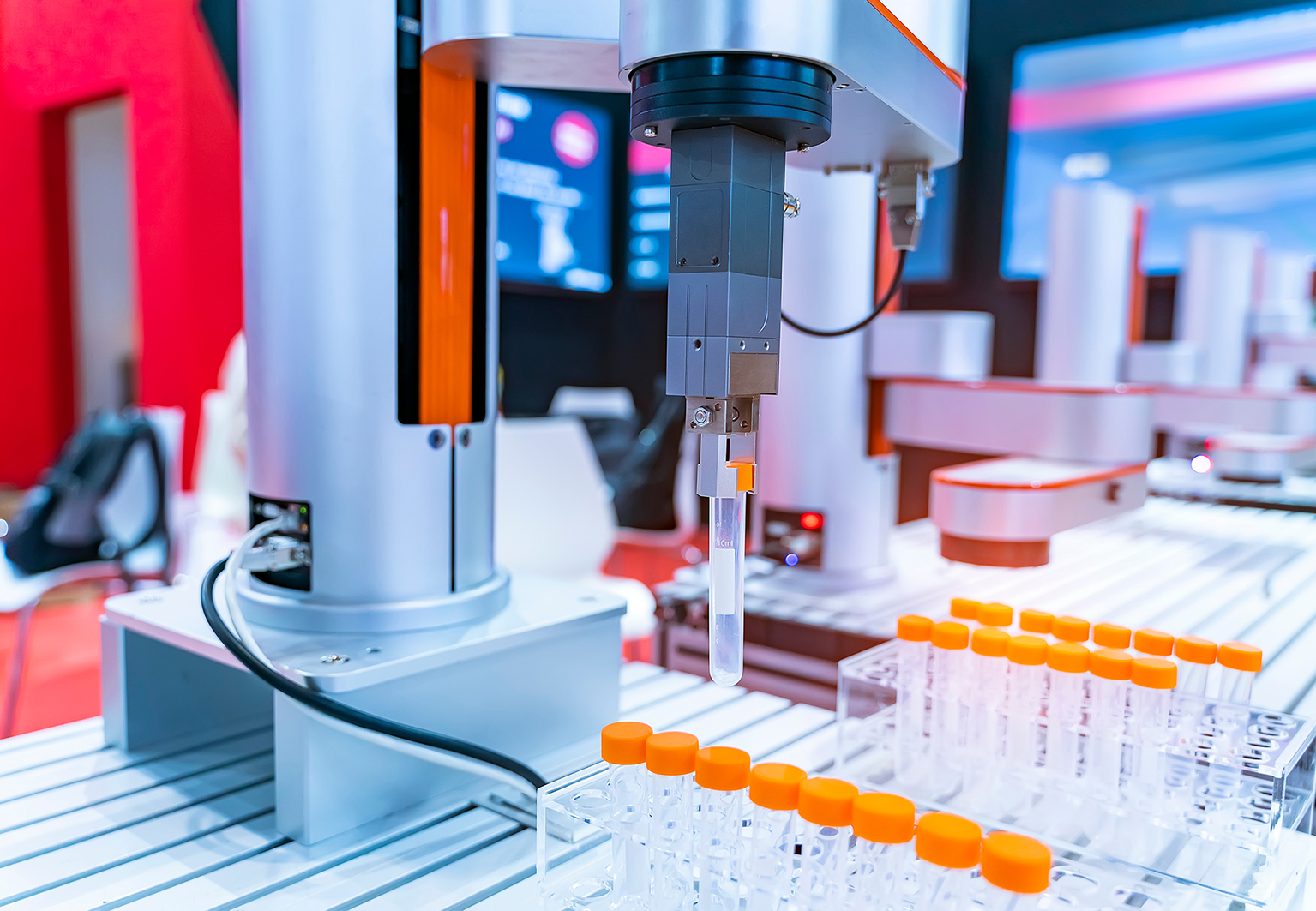
 Panasonic Systems and Solutions, a division of Panasonic Industry Europe, will present comprehensive solutions for laboratory automation at the EuroMedLab 2023 in Rome, Italy.
From May 21st to the 25th, Panasonic will exhibit its broad portfolio of sensors and automation components for laboratory diagnostic devices as well as for the total workflow automation in the La Nuvola Convention center on booth 112.
The company will showcase a range of sensors for clinical analysis, for example highly reliable optical bubble sensors, that can detect unwanted air bubbles that may provoke errors in liquid handling. The new sensors, like the FDBEF series was developed for bigger diameter tubes.
The latest development of Panasonic Industry, the BE-C14 compact convergent reflective sensor, is able to detect blood collection tubes and tube holders in a range of 2 up to 8mm. With a thickness of only 3.5mm, the sensor is very compact and ready for industrial use.
Panasonic’s micro-photoelectric sensors provide precise control over sample flow during sample vessel transportation and can be easily implemented due to their compact size.
Using analog and contactless measurement capabilities, the laser sensors are designed to accurately determine liquid levels and verify the presence, conformity, and proper positioning of caps and other moving samples.
To ensure flexibility in laboratory equipment setup, Panasonic says that it offers the world’s smallest sensors, including ultra-compact ionizers that effectively neutralize static charges in testing vessels. This prevents electrostatically charged particles from sticking together and stops liquid drops from adhering to the top edge or sidewalls of test tubes. Leak detection sensors are also available to enhance safety and facilitate smooth operation by detecting possible spills of washing or reagent liquids.
Panasonic will also showcase the micro-dosing application of its customer BiofluidiX. Since 2018, BiofluidiX has been relying on Panasonic Industry components such as bubble sensors, leak detection sensors, and ionizers.
More information on the sensors and solutions can be found here.
